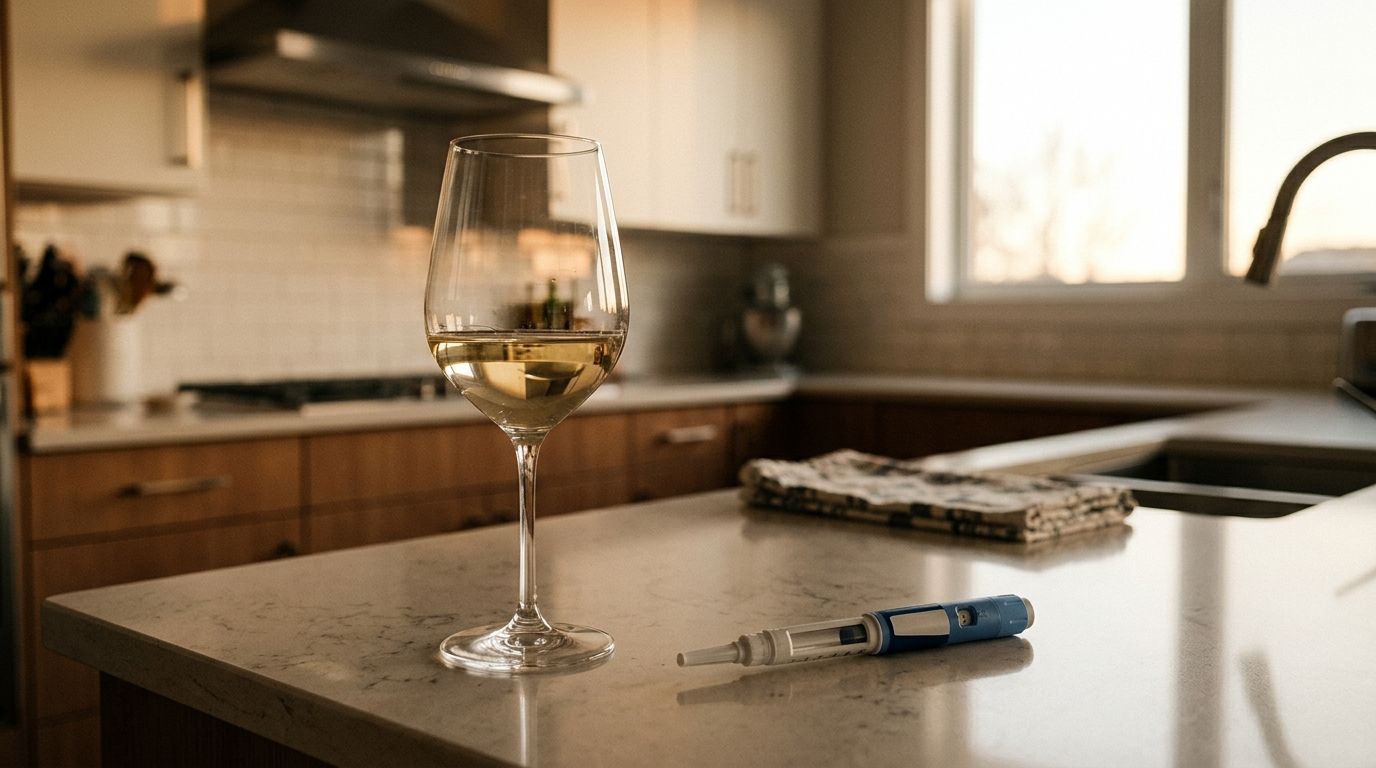
Can You Drink Alcohol on Semaglutide?
Short answer: there’s no absolute ban, but most people find their relationship with alcohol changes dramatically on semaglutide — and not always in ways they expect.
What the Research Actually Shows
Semaglutide isn’t formally contraindicated with alcohol. The FDA prescribing information for both Ozempic and Wegovy doesn’t list alcohol as a prohibited substance. But that’s not the whole story.
The GLP-1 mechanism affects alcohol processing. Semaglutide slows gastric emptying — food and liquids stay in your stomach longer. That includes alcohol. The practical result: drinks hit harder, faster, and the effects last longer than you’re used to.
A 2023 study published in JCI Insight found that GLP-1 receptor agonists reduce alcohol intake in both animal models and early human trials. Many patients report simply not wanting to drink anymore — the same appetite suppression that reduces food cravings appears to dampen the desire for alcohol.
What Actually Happens When You Drink on Semaglutide
Based on clinical reports and patient experiences, here’s what to expect:
Increased sensitivity. One glass of wine may feel like two or three. Your tolerance drops significantly because alcohol sits in your stomach longer and absorption patterns change.
Worse nausea. If you’re already managing GLP-1 nausea (which affects about 44% of Wegovy users), alcohol makes it significantly worse. The combination of a slowed stomach and alcohol’s irritation to the stomach lining can trigger severe nausea and vomiting.
Blood sugar instability. Both semaglutide and alcohol lower blood sugar independently. Combined, they can cause hypoglycemia — especially dangerous for people with Type 2 diabetes. Symptoms include dizziness, confusion, shakiness, and in severe cases, loss of consciousness.
Increased dehydration. Semaglutide already reduces your fluid and food intake. Add alcohol’s diuretic effect and dehydration becomes a real concern, which worsens side effects like headaches and constipation.
Pancreatitis risk. This is the serious one. Both semaglutide and heavy alcohol use are independently associated with pancreatitis. Combining them may increase this risk, though large-scale studies on the combined risk are still limited.
The Practical Guide
If you’re going to drink:
- Start with half your usual amount. Seriously. Your tolerance has changed even if you don’t feel different yet.
- Eat something first. Never drink on an empty stomach while on semaglutide — the nausea combination can be brutal.
- Hydrate aggressively. One glass of water for every alcoholic drink, minimum.
- Skip sugary cocktails. They compound the blood sugar swings. Dry wine or spirits with soda water are better choices.
- Avoid drinking on injection day. Many patients report the worst interactions in the 24-48 hours after their weekly injection when drug levels peak.
- Monitor your blood sugar if you have diabetes. Keep glucose tabs available.
Red flags — stop drinking and contact your doctor if you experience:
- Severe abdominal pain that radiates to your back (possible pancreatitis)
- Vomiting that won’t stop
- Signs of hypoglycemia (confusion, shakiness, sweating)
- Extreme dizziness or fainting
What Many Patients Report
A significant number of semaglutide users report that they simply stop wanting alcohol. Reddit communities and patient forums are full of accounts like “I used to have a glass of wine every night and now I have zero interest.” Researchers believe this is related to GLP-1’s effect on the brain’s reward pathways — the same mechanism that reduces food cravings may also reduce alcohol cravings.
This has led to active research into GLP-1 medications as potential treatments for alcohol use disorder, with several clinical trials currently underway.
The Bottom Line
You won’t find “do not drink” on the label. But the reality is:
- Your tolerance is lower than you think
- The side effects compound badly
- Many people naturally lose interest in drinking anyway
- If you have diabetes, the blood sugar risks are real
Talk to your prescribing doctor about your specific situation, especially if you drink regularly. They can help you navigate this based on your health profile and dosage.
This article is for informational purposes only and does not constitute medical advice. Always consult your healthcare provider about alcohol use while on any medication.