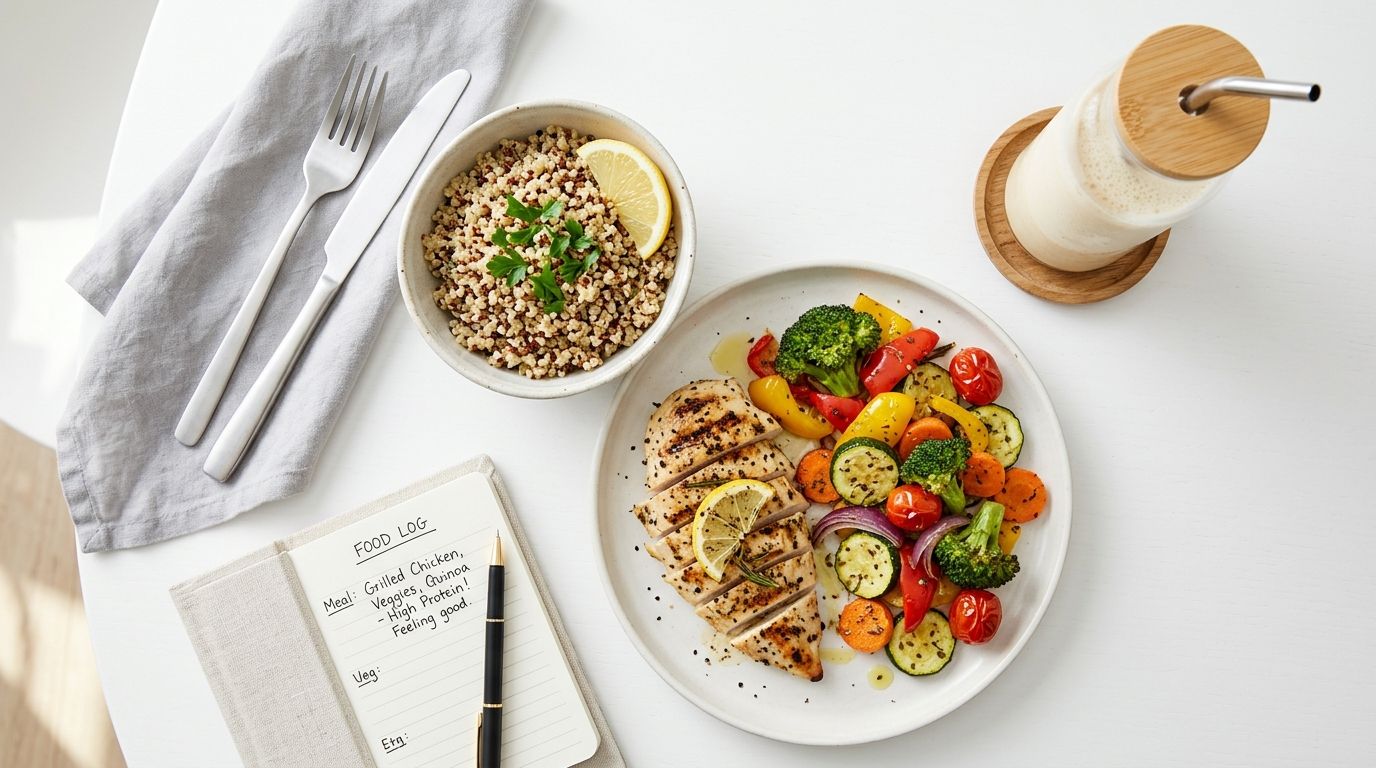
What to Eat on GLP-1: The Complete Diet Guide
GLP-1 medications kill your appetite. That’s the point. But eating less doesn’t mean eating well — and when every bite matters more, the quality of those bites becomes critical.
Here’s the practical food guide nobody gives you with your prescription.
The Core Principle: Protein First, Always
When you’re eating 1,000-1,500 calories instead of 2,000+, you can’t afford to waste them. Protein is the priority because:
- It preserves muscle mass (up to 40% of GLP-1 weight loss can be muscle — see our muscle loss prevention guide)
- It’s the most satiating macronutrient
- It requires more energy to digest than carbs or fat
Target: 25-40g of protein at every meal.
Meal-by-Meal Blueprint
Breakfast (aim for 30g protein)
Best choices:
- 3 eggs scrambled with spinach and feta (21g protein + add turkey sausage for 30g+)
- Greek yogurt (plain, full-fat) with berries and a scoop of protein powder (35-40g)
- Protein smoothie: whey protein + banana + peanut butter + milk (30-40g)
- Cottage cheese with fruit (28g per cup)
Skip: Cereal, toast with jam, muffins, pastries — all carbs, minimal protein, won’t keep you satisfied
Lunch (aim for 30-40g protein)
Best choices:
- Grilled chicken salad with avocado, nuts, olive oil dressing
- Turkey or chicken wrap (whole grain tortilla, lots of protein, light on fillers)
- Tuna or salmon over rice with vegetables
- Bone broth-based soup with chicken and vegetables (easy to eat when appetite is low)
Dinner (aim for 30-40g protein)
Best choices:
- Baked salmon with roasted vegetables (easy on the stomach)
- Chicken thighs with sweet potato and steamed broccoli
- Lean ground turkey stir-fry with vegetables and rice
- Shrimp with zucchini noodles and marinara
Snacks (when you can fit them in)
- Hard-boiled eggs (6g each)
- String cheese (7g each)
- Beef or turkey jerky (10-15g per serving)
- Protein bars (look for 20g+ protein, under 5g sugar)
- Edamame (18g per cup)
- Almonds or mixed nuts (small handful)
Foods That Help With GLP-1 Side Effects
For Nausea
- Plain crackers or rice cakes
- Ginger tea or ginger chews
- Bananas
- Plain broth
- Popsicles (hydration + gentle calories)
For Constipation (common side effect)
- High-fiber foods: lentils, beans, berries, broccoli, chia seeds
- Prunes or prune juice (natural laxative)
- Plenty of water (fiber without water makes constipation worse)
- Psyllium husk supplement (Metamucil)
For Fatigue
- Iron-rich foods: lean red meat, spinach, lentils
- B-vitamin sources: eggs, fortified cereals, leafy greens
- Complex carbs for sustained energy: sweet potatoes, oats, quinoa
Foods to Minimize or Avoid
Fried and greasy foods. Your slowed stomach can’t process these well. The result is nausea, bloating, and discomfort. This includes french fries, fried chicken, heavy cream sauces, and fast food.
Sugary foods and drinks. Your blood sugar regulation is already altered by the medication. Adding sugar on top can cause spikes and crashes. Skip sodas, candy, pastries, and sweetened coffees.
Large portions of anything. Even healthy food causes problems in large quantities. Your stomach empties slowly — overfilling it causes nausea and reflux.
Carbonated beverages. The gas has nowhere to go in a slow-moving stomach. Many patients report bloating and discomfort from sparkling water, soda, and beer.
High-fat dairy in large amounts. Full-fat cheese, ice cream, and heavy cream can sit poorly. Small amounts are fine; a bowl of ice cream is not.
Alcohol. See our complete guide on alcohol and semaglutide. Short version: your tolerance drops dramatically, nausea compounds, and blood sugar risks increase.
The Supplement Stack
When you’re eating less, certain nutrients become hard to get from food alone:
| Supplement | Why | Dose |
|---|---|---|
| Protein powder (whey or plant) | Hit daily protein target | 1-2 scoops/day |
| Multivitamin | Cover micronutrient gaps | 1 daily |
| Vitamin D | Most adults are deficient; harder to get with reduced food intake | 2,000-4,000 IU daily |
| Magnesium | Helps with constipation + muscle cramps | 200-400mg at bedtime |
| B12 | Can be depleted with reduced meat intake | 1,000mcg daily |
| Omega-3 (fish oil) | Anti-inflammatory, heart health | 1,000-2,000mg daily |
| Fiber supplement | If diet fiber is insufficient | Psyllium husk as needed |
Sample Day (1,400 calories, 130g protein)
| Meal | Food | Calories | Protein |
|---|---|---|---|
| Breakfast | Greek yogurt + berries + protein scoop | 350 | 40g |
| Snack | String cheese + almonds | 180 | 12g |
| Lunch | Grilled chicken salad w/ olive oil | 400 | 35g |
| Snack | Protein shake | 170 | 30g |
| Dinner | Baked salmon + roasted vegetables | 300 | 28g |
| Total | 1,400 | 145g |
Eating When You Have Zero Appetite
Some days you won’t want to eat at all. This is dangerous — your body still needs nutrition even when hunger signals are absent.
Strategies:
- Set meal reminders on your phone
- Liquid calories count: protein shakes, smoothies, bone broth
- Small, frequent “grazing” rather than trying to force a full meal
- Keep ready-to-eat protein snacks visible and accessible
- Eat by the clock, not by hunger
Minimum daily intake: Don’t go below 1,200 calories (women) or 1,500 calories (men) without medical supervision. Under-eating is a real risk on GLP-1s, not just over-eating.
The Bottom Line
GLP-1 medications change what you can and want to eat. Use that to your advantage: prioritize protein, manage side effects with food choices, supplement what you can’t get from reduced portions, and never let “not hungry” become “not eating.” Every calorie you eat should earn its place on your plate.
This article is for informational purposes only and does not constitute medical advice. Consult a registered dietitian or your healthcare provider for personalized nutrition guidance.